Who Was Sending Food to Jantar Mantar? Police Traced Restaurants Through Discarded Wrappers
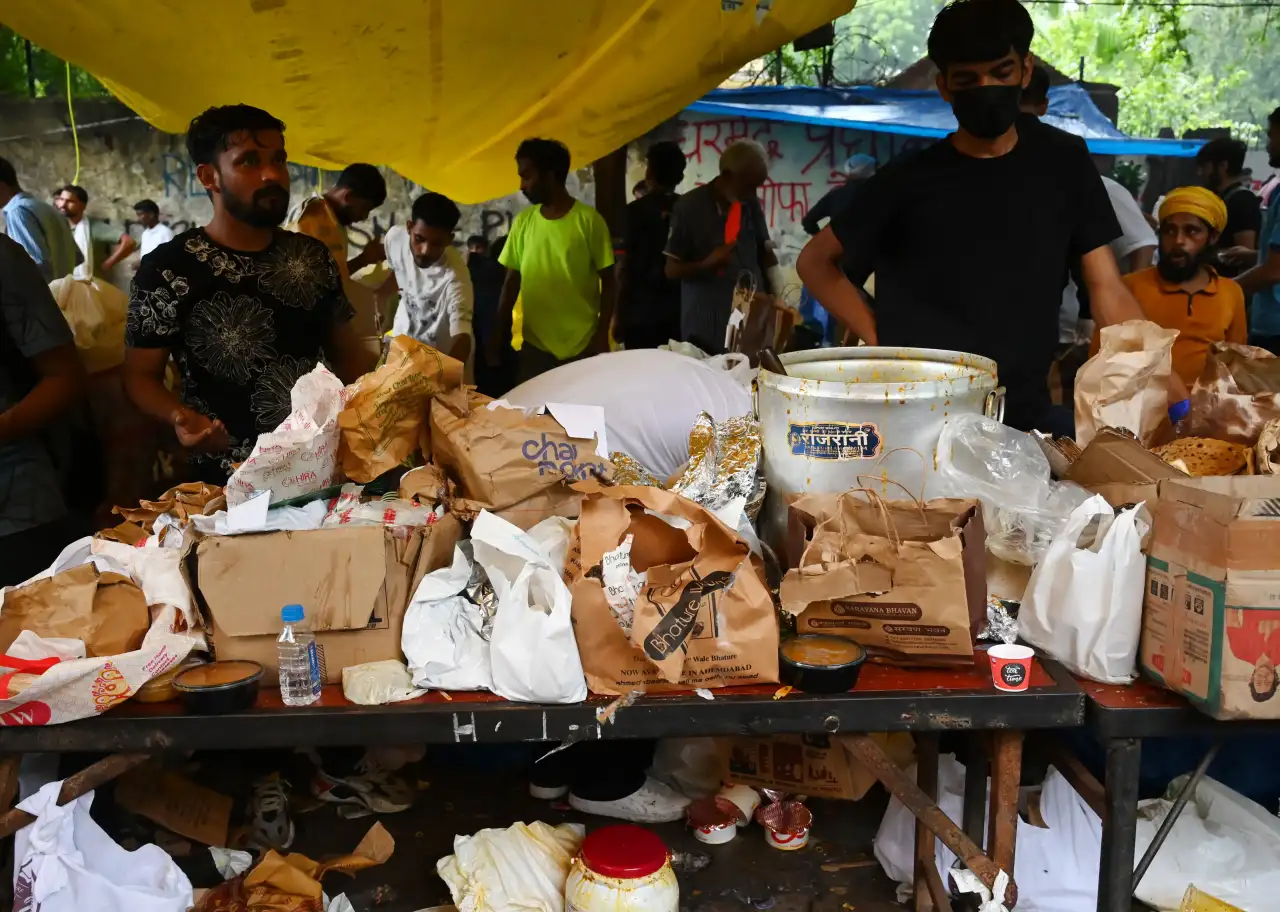
New Delhi: A discarded food wrapper lying in the garbage at Delhi’s Jantar Mantar has reportedly become an important clue for the police amid the ongoing protest at the site. According to reports, Delhi Police has been tracking restaurants and cafes that supplied food to protesters by examining packaging material and wrappers found around the protest venue.
The development has raised questions about the large-scale food deliveries that had been reaching Jantar Mantar over the past several days. Meals, snacks, bottled water and other refreshments were reportedly being sent to the protest site by supporters, volunteers, restaurants and people from different parts of the country.
Several restaurant and cafe owners have claimed that police personnel visited their establishments and asked questions about food orders delivered to the protest site. Some outlets were reportedly asked to provide details of paid bulk orders as well as food that had been sent free of cost.
The issue has become a major talking point as the protest at Jantar Mantar continues to attract support from people outside Delhi. While some supporters have been sending food through online delivery platforms, local restaurants have also reportedly contributed meals and refreshments.
According to a report by The Indian Express, police officials visited several food outlets and examined their recent order and delivery records. One restaurant owner claimed that the establishment had been supplying around 800 food items per day to the protest site over a period of three days. The owner said police officials came to the South Delhi outlet and questioned staff about how the restaurant’s food had reached Jantar Mantar in such large quantities.
How did police identify the restaurants?
The investigation reportedly began with the food packaging and wrappers found at or near the protest site. Food delivery packaging often carries details that can identify the restaurant, including the brand name, logo and other markings.
Using such discarded material, police officials allegedly traced some of the restaurants and cafes whose food had reached Jantar Mantar. The owners and employees of several outlets said officers asked them to explain their recent deliveries to the protest location.
In some cases, restaurant staff were reportedly asked to provide information about orders placed through food delivery platforms. The focus was reportedly on bulk orders and free food deliveries made to the protest site.
One restaurant owner told The Indian Express that police officials visited the outlet when the owners were not present. The staff were asked questions, and the owners were later reportedly called to a police station. According to the owner’s account, police officials questioned the restaurant about large quantities of food reaching the protest site and asked about orders placed through platforms such as Swiggy and Zomato.
The restaurant owner also claimed that officials advised the establishment to be cautious about large orders connected with the protest location. The account has led to a debate over whether restaurants are being informally discouraged from supplying food to protesters.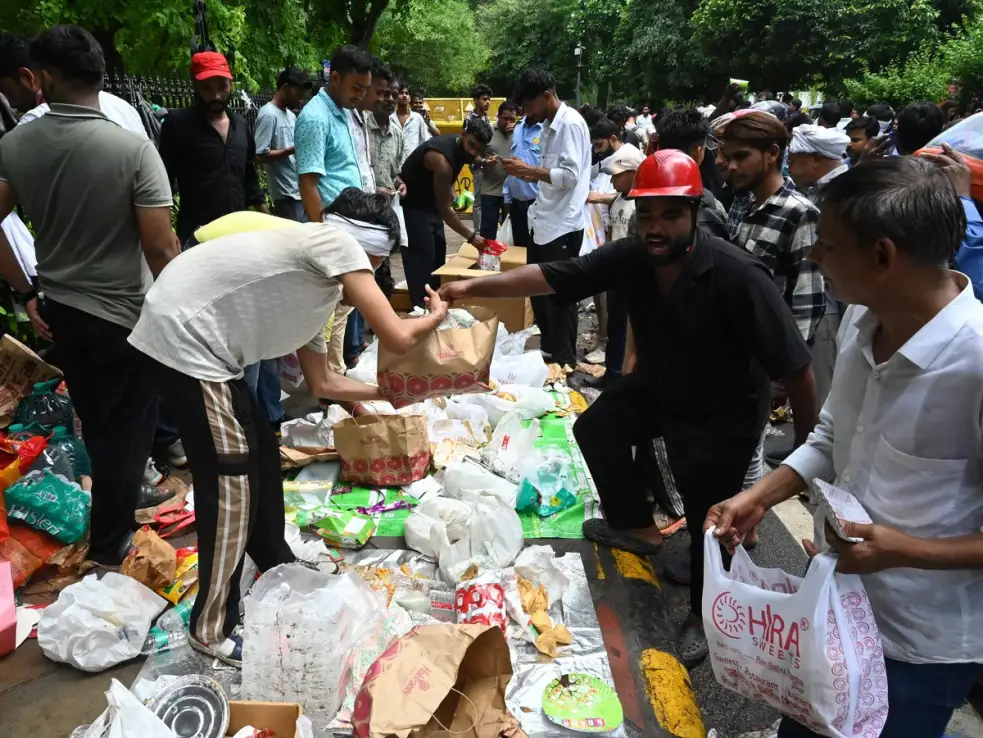
Restaurants say they were asked to stop sending food
Several outlets reportedly said that police personnel asked them about food sent to Jantar Mantar. A cafe employee claimed that the establishment had to provide details of deliveries made through food delivery applications.
The employee also said the cafe had earlier shared a social media post offering support to people connected with the protest but later removed the post following a visit by police officials.
According to the employee’s account, officers reportedly said that the outlet’s packaging had been found at the protest site. The cafe was then asked to provide details of deliveries made there and was allegedly advised not to continue sending free food.
The claims have not been officially confirmed in full by Delhi Police. Reports said that queries sent to the police regarding the alleged visits to restaurants and the specific action taken against individual outlets had not received a response at the time of publication.
This distinction is important. While restaurant owners have described their interactions with police, there has been no publicly announced blanket order stating that all restaurants are prohibited from sending food to Jantar Mantar.
Food support grew after the protest intensified
The food deliveries became increasingly visible after the protest at Jantar Mantar gained momentum. Supporters who were unable to travel to Delhi reportedly began sending food, water and other essentials to people at the protest site.
Several videos circulating on social media showed delivery agents arriving with food orders that had already been paid for. In some cases, the people who placed the orders were reportedly located in other cities.
Reports from the protest site described food deliveries arriving from different parts of India. Some orders were reportedly intended for anyone at the venue who needed food rather than for a specific individual.
The support ranged from basic meals and snacks to tea, sandwiches, bottled water and other food items. Volunteers at the venue reportedly distributed the food among protesters and others present at the site.
A report by The Indian Express earlier described delivery instructions attached to one order as carrying a message of support from Kerala. Other reports said people from outside Delhi had used online delivery platforms to send meals to the protest location.
The trend also received attention on social media, where videos showed food delivery partners reaching the area with orders placed by unknown or distant supporters.
Why did food deliveries become a major issue?
The controversy over food deliveries comes against the backdrop of restrictions and security arrangements around the Jantar Mantar area.
Delhi Traffic Police issued an advisory asking citizens to avoid unnecessary travel to restricted areas and use alternate routes wherever possible. The advisory also said that app-based mobility, ride-hailing, food delivery, logistics and e-commerce services should regulate operations in restricted areas during the period of prohibitory orders to support public safety and maintain law and order.
At the same time, Delhi Police reportedly denied social media claims that food delivery services had been completely banned across the New Delhi area.
In a clarification reported by The Indian Express, Delhi Police said claims that food delivery applications had been banned throughout the New Delhi area were false and misleading. The police maintained that the situation involved regulation of services in restricted areas rather than a general ban on food delivery.
This clarification is significant because the issue had triggered considerable discussion online. Videos and posts showing food deliveries being made to Jantar Mantar led many users to question whether restaurants and delivery platforms were being prevented from serving the protest site.
The police position, as reported, was that food delivery services had not been banned throughout New Delhi. However, operations in restricted areas could be regulated as part of the security and law-and-order arrangements.
Was the food being sent by one person or one organisation?
At this stage, available reports do not point to a single person or organisation responsible for all the food reaching Jantar Mantar.
Instead, the food appears to have come through multiple channels. These reportedly included individual supporters, groups of volunteers, restaurants, cafes and people using food delivery applications.
Some supporters reportedly placed orders remotely and instructed delivery agents to take the food to the protest site. Others reportedly sent meals or refreshments directly.
The scale of the deliveries created an unusual situation at the venue. Volunteers were reportedly receiving more food than they could immediately distribute at certain times.
A report by India Today described anonymous supporters sending food to the protest site in large quantities, with volunteers receiving meals from people whose identities were often unknown to them. The report said that deliveries included different types of meals and refreshments.
Another report by ThePrint described numerous anonymous donors sending food to protesters, with deliveries ranging from tea and snacks to more substantial meals.
The mystery surrounding the donors added another dimension to the story. Many people who sent food were reportedly not physically present at the protest but wanted to support those who were.
Police action reportedly focused on food suppliers
The reported visits to restaurants and cafes have now become the centre of the controversy.
According to accounts from some owners and employees, police officials asked about food sent to Jantar Mantar and requested order details. Some outlets reportedly had to explain paid orders, bulk orders and complimentary food deliveries.
The use of discarded wrappers as a possible investigative lead has also attracted attention. Unlike a conventional investigation that may begin with a complaint or formal transaction record, the reported method involved examining the waste generated at the protest site and identifying the source of food packaging.
For restaurants, the packaging used for food deliveries can act as a visible identifier. Logos, branding and other information can make it possible to determine where a food item came from.
The development has also raised concerns among restaurant owners about the consequences of providing food to people at a protest site. Some owners reportedly said that they felt pressured to avoid sending food there, even when the orders were paid for.
However, it remains important to distinguish between allegations made by individual businesses and officially confirmed police action. As of the latest reports, Delhi Police had not publicly detailed any broad order prohibiting restaurants from sending food to Jantar Mantar.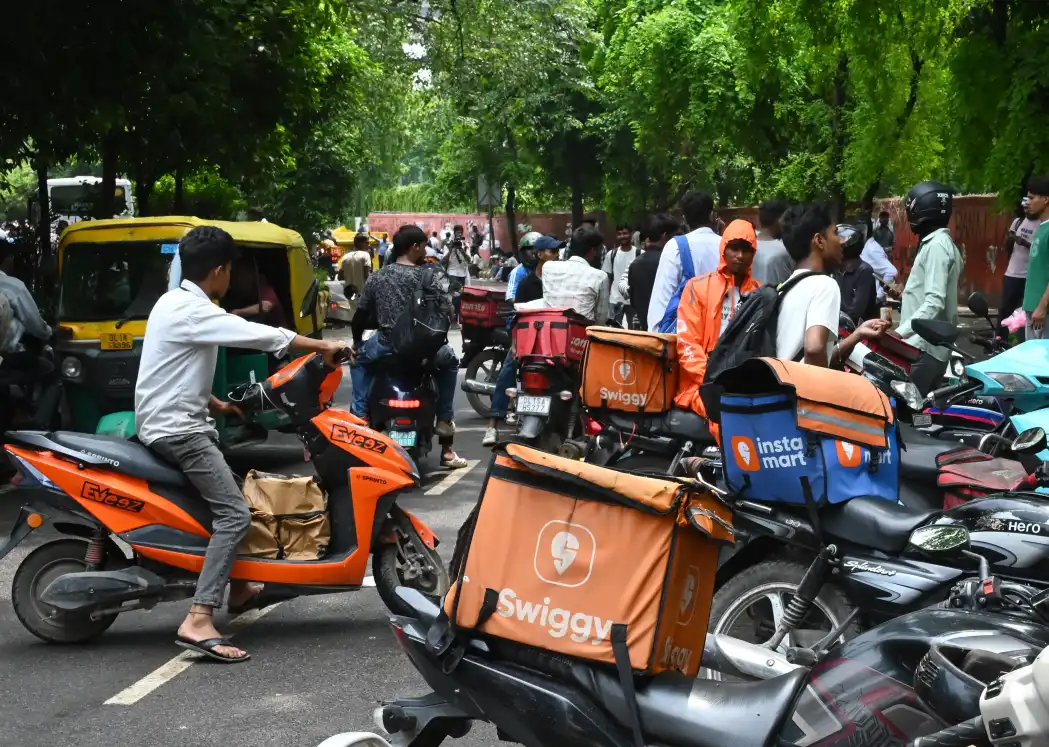
Delhi Police says food delivery has not been banned
The debate intensified after social media posts began circulating claims that food delivery services had been stopped in the New Delhi area.
Delhi Police reportedly rejected those claims and said that no general ban had been imposed on food delivery services. The police clarification came amid restrictions in parts of the area due to the protest and related security concerns.
The traffic advisory reportedly referred to the regulation of app-based mobility, delivery and logistics operations in restricted areas. This is different from stopping all food delivery services across New Delhi.
The distinction between a ban and regulation is therefore central to the controversy.
A ban would mean that delivery services are prohibited entirely. Regulation, on the other hand, can involve restrictions on routes, entry points, timings or access to specific restricted zones.
The exact arrangements can vary depending on security requirements and the location of the delivery.
Protesters continue to receive support
Despite the controversy over restaurant deliveries, support for people at the protest site has continued through various means.
Volunteers have reportedly distributed food, water and other essentials. Supporters have also contributed supplies directly.
Earlier reports from the protest site described people bringing home-cooked food, bottled water, biscuits, snacks and medicines. Some people reportedly arrived after seeing videos of the protest and decided to contribute supplies.
Hindustan Times reported that support at the site included food, medicines and other essential items following police action connected to the protest. The report also described online food orders arriving for people at the venue.
The growing support has made food an important part of the wider story surrounding the protest. For some supporters, sending a meal has become a way of showing solidarity without physically joining the demonstration.
The larger question: Can restaurants send food to a protest site?
The latest developments have also triggered a wider question about the rights and responsibilities of businesses operating during a protest.
Restaurants routinely accept orders through food delivery platforms. If an order is legally placed and paid for, the business generally processes it according to its operational policies. However, restricted areas can be subject to special security arrangements, particularly when large public gatherings are taking place.
In such circumstances, delivery routes and access to specific locations may be regulated by authorities.
The controversy arises when restaurants claim they were individually contacted and asked to stop sending food, while authorities simultaneously say there is no general ban on food delivery services.
For now, the issue appears to be developing. The accounts of restaurant owners and cafe employees have brought attention to the police’s reported efforts to identify food suppliers, while official statements have focused on the absence of a blanket ban on food delivery across New Delhi.
What happens next?
The matter is likely to remain under scrutiny as the Jantar Mantar protest continues.
More restaurants could come forward with details of their interactions with police. Authorities may also provide further clarification about the precise rules governing food delivery and other commercial services in restricted areas around the protest venue.
The central questions remain:
- How many restaurants and cafes were contacted?
- Were any formal notices issued?
- Were food suppliers asked to stop all deliveries or only free and bulk deliveries?
- What specific restrictions apply to delivery services in the Jantar Mantar area?
- Were the restaurants identified solely through discarded packaging or through additional order records?
At present, the available reports indicate that police officials reportedly used discarded food packaging found near the protest site to identify some outlets whose food had reached Jantar Mantar. Restaurant owners and employees have described questioning over deliveries and, in some cases, alleged pressure to stop sending food.
At the same time, Delhi Police has reportedly denied that food delivery services have been banned throughout New Delhi and has described claims of a general ban as false.
The controversy therefore remains centred on the difference between regulating deliveries in a restricted protest zone and prohibiting restaurants from supplying food to the protest site.
As more information emerges, the actions of the police, the accounts of restaurants and the experience of delivery workers are likely to remain an important part of the developing Jantar Mantar story.
Read This :- Raghav Chadha Seeks Punjab CM's Arrest over Sacrilege Video